
Karnataka
We know this ground.
Bolamudi Enterprise develops the land, approvals and right of way that utility-scale renewable projects in Karnataka stand on. This is a district-by-district account of how that actually works here — what the land looks like, where the approvals slow down, and what stops projects.
How to read this coverage
Core Operating Districts
Where we work continuously and hold current ground knowledge.
Active Coverage
Where we operate on project mandate.
Statewide Capability
Where we can mobilise, with lead time.
Not claimed
Districts without meaningful utility-scale renewable potential. We would rather say so.
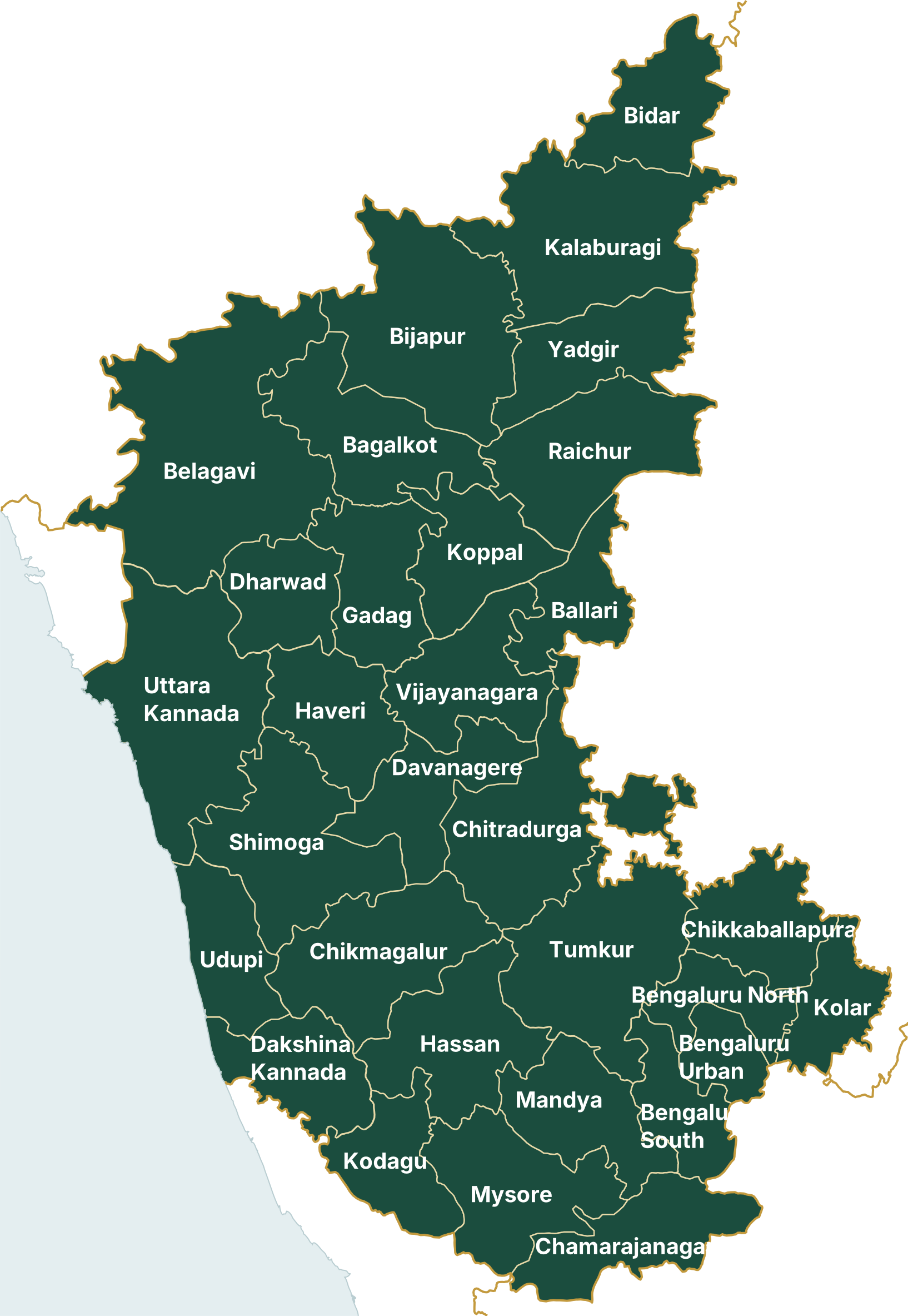
Statewide
All 31 districts. One state, worked end to end.
From Bidar to Chamarajanagar, we take land, approvals and right of way work anywhere in Karnataka. The tiers below show where we hold continuous ground knowledge and where we mobilise on mandate.
Coverage Matrix
The state, tiered honestly
Karnataka’s utility-scale renewable resource is geographically lopsided, and everyone in this audience knows it. A map that lights up Udupi with the same intensity as Koppal tells an informed visitor you don’t know the state.
| Tier | Districts | Technologies | What it means |
|---|---|---|---|
| CORE | Tumakuru · Chitradurga · Koppal · Gadag · Ballari · Vijayanagara · Vijayapura · Bagalkot | Solar · Wind · Transmission | Continuous operation, current ground knowledge, district briefings available. |
| ACTIVE | Bidar · Kalaburagi · Yadgir · Raichur · Davanagere · Haveri · Belagavi · Shivamogga | Solar · Wind · PSP | Operating on project mandate; recent field presence. |
| STATEWIDE | Remaining RE-relevant districts | Case by case | Mobilisation with lead time; assessed against the specific site. |
| NOT CLAIMED | Coastal belt · much of Malnad · Bengaluru Urban | — | No meaningful utility-scale solar or wind resource. We would rather say so. |
Ground Intelligence
Featured district: Koppal
Kalaburagi Division · Core Operating District · Solar · Wind · Transmission
Resource profile. Strong direct normal irradiance across the northern taluks with a workable wind regime on the higher ground; among the districts the state has identified for ultra-mega solar development.
Land character. Fragmented dryland holdings with active joint-family shares; workable contiguous blocks are achievable but demand disciplined parcel sequencing and early hold-out identification.
Approvals character. Conversion and Section 109 dominate the early file; the queue forms at the district revenue offices, and sequencing against KREDL registration decides the quarter.
Evacuation character. Grid context is favourable near the ultra-mega park corridors, but bay availability must be confirmed before land commitment, not after.
Honest Limits
Where we don’t operate
Karnataka’s renewable resource is not evenly distributed, and neither is useful expertise.
The coastal districts and much of the Malnad belt do not support utility-scale solar or wind at competitive tariffs — rainfall, forest cover, terrain and land fragmentation all work against it. Pumped storage is a different question in that geography, and one we follow closely, but hydrological and forest clearance work there is a specialist discipline with its own institutional relationships. We will say honestly where our knowledge ends.
We also do not take on land aggregation where the parcel structure or the local situation means the timeline we would have to quote is one no developer should accept. It is faster and cheaper for everyone to learn that in the first conversation.
If a district is outside what we claim, we will usually still know who to point you to.
If you are assessing a site in Karnataka, start with the questions that decide the project.
Is the land clean, is the bay available, and is the corridor realistic. We will tell you before you commit capital, not after.